fRootsenanny!, The Roundhouse, London, January 22nd 2010
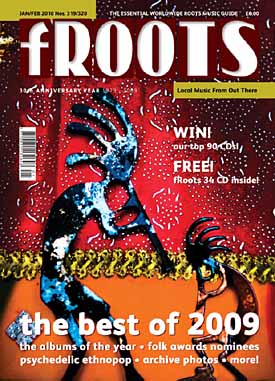 fRoots magazine – the bible for traditional folk and world roots music in the UK – celebrates its 30th birthday this year and the occasion was marked by a ‘star-studded’ concert at the Roundhouse. Host and long-time fRoots editor and all-round folk-booster Ian Anderson (no, not the Tull one) kicked off the evening by introducing Ian King and his soul-dub horn section (all mixed by Adrian Sherwood). The blend of traditional songs and ‘modern’ sounds worked fine, even though I’m not normally a fan of ‘world fusion’. To my ears, it can be interesting but is often gimmicky and limiting. This time, though, it worked.
There were too many performers on the night to do justice to here, but the highlights for me were Devon Sproule and Paul Curreri, who have certainly matured their sound and their songwriting, the Martin Simpson Band, and the Oysterband with June Tabor. These last did a splendid dirge-like rendering of Joy Division’s Love Will Tear Us Apart, which drew appreciation from even some of the diehard folkies in the audience.
Jim Moray was good, as was the bewitchingly eccentric Pamela Wyn Shannon, but the evening tailed off somewhat with the last two scheduled acts, a re-formed 3 Mustaphas 3 (to which news my uncharitable response was ‘meh…’) and Billy Bragg and the Acoustic Blokes.
Unfortunately, this was one of those occasions when Bill refused to let the songs do the talking and instead took the opportunity to rant on his usual subjects (English patriotism, reform of Parliament, hatred of the Tories etc etc). By this time, I was getting a little irked, so when he berated us to support Labour in the next election, I shouted something about the War Party. He ignored me… Oh well, it would be nice to feel as righteous as Bill, but that’s not a privilege I try to allow myself.
Things picked up at the end, though, with the whole assembly encoring with Hard Times Of Old England and White Cliffs Of Dover and the audience trailed out into a chill Camden night feeling nicely folked up.
For no particular reason, here’s a fine video of Jim Moray covering XTC’s All You Pretty Girls
Wolfmother, Brixton Academy, January 21st 2010
Aussie rockers Wolfmother first appeared on my radar last October when I saw them play at Neil Young’s Bridge School Benefit shows in California. As is the Bridge way, they played with acoustic instruments and I smiled as they trotted out a set of pastiche Black Sabbath and Led Zeppelin riffs. What’s more, the big-haired vocalist even sounds like Robert Plant at his shriekiest. Neil Young clearly liked them, as he could be seen toe-tapping energetically stage-left (see the dodgy video below).
I realise that they play louder and electric normally and discovered that my teenage son likes them, so we headed off to Brixton expecting an evening of raawwwk. Support band the Black Angels (who I saw a couple of years ago and enjoyed) have a nice line in fuzzy, driving West Coast psychedelic 60s garage, but the appalling sound in the Academy nearly ruined their set entirely.
Why do bands tolerate such atrocious sound? I appreciate that the sound man is there to make the headliners sound good (but even Wolfmother were audibly unbalanced and boomy), but there’s no need to make the support almost unlistenable. In all my years of going to the Academy, only Neil Young has managed to get good sound out of it – and that’s because he ships in all his own crew and spends painstaking hours soundchecking.
Anyway, Wolfmother came on and did their thing. It’s all very entertaining if too play-by-numbers for my liking, but the crowd lapped it up. About half of them seemed to be expat Aussies who were getting extremely drunk. My gig buddy The Suit said tartly that Aussies in London will go and see any Aussie band, even if they don’t like or know the music. Which might be true, and there was certainly a lot of shouting at each other and spilling of drinks going on.
My son thoroughly enjoyed it in the moshpit until he realised that he’d been pickpocketed (through a zipped pocket). It turns out that gangs have been targeting big venues (particularly the Academy) and pickpocketing en masse. It would be nice if the venue could put up a big sign to that effect, but I guess they don’t want to harm their ‘reputation’. Bummer.
Sam Lee and the Gillie Boys, St Anne & St Agnes Church, City of London, January 21st 2010
A quick read of Sam Lee’s CV will show you he’s the real deal. A lover of folk-song in all its guises, Sam was for several years apprenticed to Scottish traveller and ballad-singer Stanley Robertson, who sadly died last year at the age of 69.
Sam is an accomplished singer of a cappella songs, but is backed these days by the Gillie Boys – three musicians who employ an unashamedly non-authentic bunch of instruments, including banjo, upright bass and jew’s harp. Sam himself plays the ‘shruti box’ – these were simple Indian instruments fashioned out of cast-off British Empire melodeons and turned into crude harmonium-style drone-boxes.
This background reveals a lot about Sam’s approach to English folk. His fierce determination to be a preserver of tradition is matched by his insistence on the essential mutation of tradition by outside influences. Indeed, he has spent much of his folk ‘career’ following English Romany Gypsy singers, whose canon encompasses all manner of ‘exotic’ modal tunes and rhythms, but which are still unmistakably English. We are, as the man said, a mongrel nation.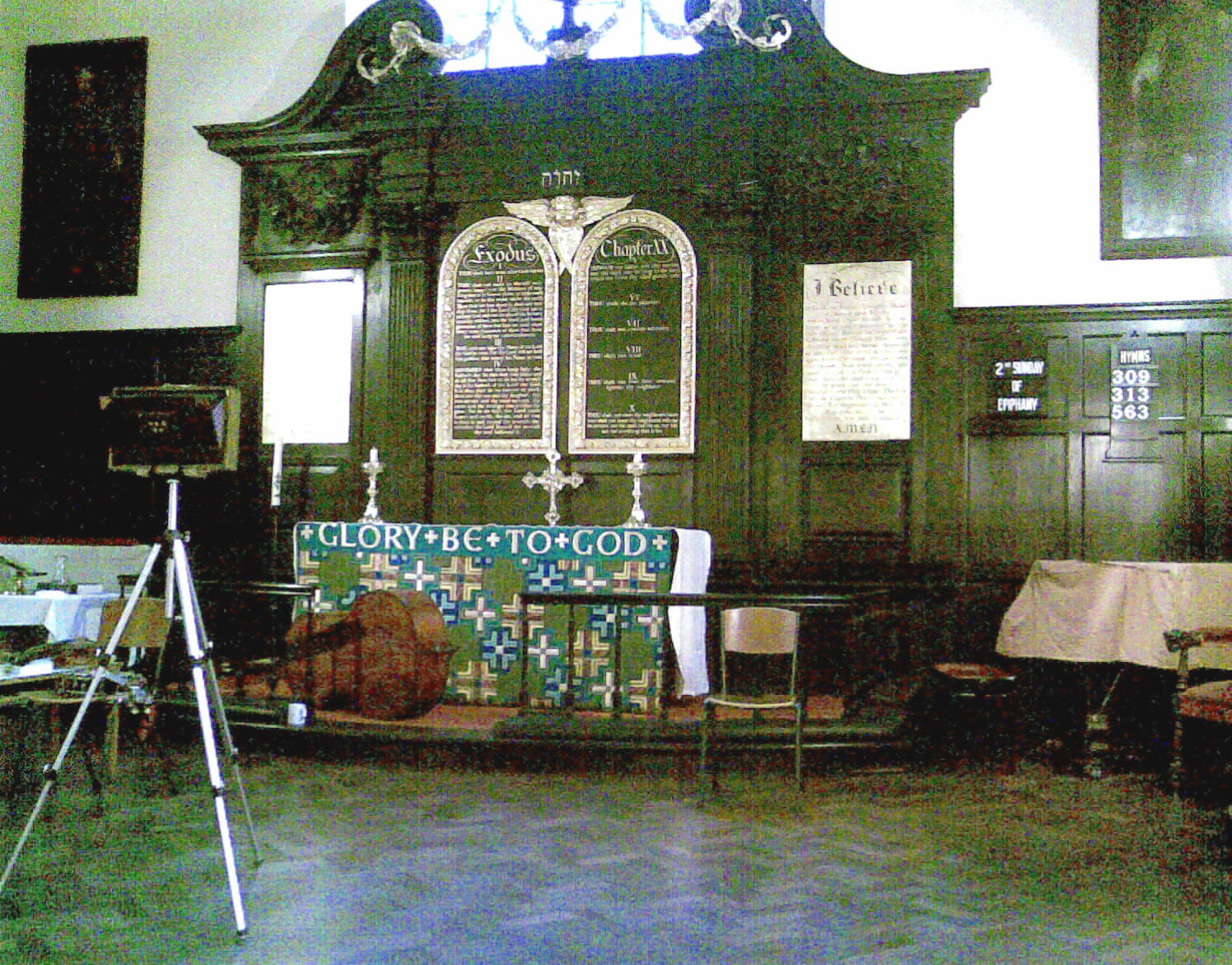 This free lunchtime show in the beautiful St Anne & St Agnes Church in the City kicked off with a lovely a cappella rendering of The Deserter, followed by a band version of The Unquiet Grave called Cold Blow The Drops Of Rain. Sam has a great voice but also employs the extraordinary ‘throat singing’ style often associated with the Tuvan singing of Mongolia. It’s a truly strange sound, but perfectly complements the drone of the ‘shruti’ and the desolation of the song’s theme.
One highlight of the show was The Jew’s Garden, an anti-semitic song from the 14th Century that is still sung among the Scottish traveller community. Sam has added a verse or two to the song, not to soften it, but to put it into some sort of popular context. This doesn’t make the song any less disturbing, but if you’re going to listen to folk songs, you’re not always going to hear what you approve of. Here are a few versions of the song (alternatively known as Sir Hugh or The Jew’s Daughter).
After a stirring George Collins, the show wrapped up with Goodbye My Darling, underlining Sam’s breadth and depth of talent. Not bad for a man who’s still in his 20s. If you get the chance, drop into his fine North London folk-club The Magpie’s Nest.
I’d like to write more, but I don’t have the time and this evening I’ll be watching Aussie hairy rockers Wolfmother at Brixton Academy. I’m not sure the rest of Sam’s audience can say the same… Here are Sam and the boys singing Goodbye My Darling at the launch of Will Hodgkinson’s book Ballad Of Britain at Cecil Sharp House last October.
The Men They Couldn’t Hang, The 100 Club, London, January 15th 2010
Walking into the 100 Club was like walking back into West London in the late 80s – the sound of urban punk-folk with an Irish inflection. The Pogues were the leaders of this non-movement (and to some extent Elvis Costello before them), but the more English band The Men They Couldn’t Hang ran them a close second. 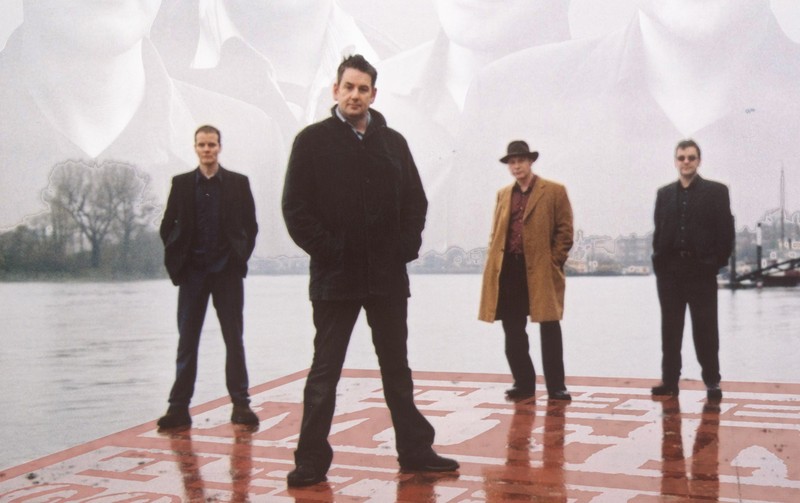 Back in those days, folk music had been almost wiped from music’s collective memory – I remember going to see Bert Jansch and John Renbourn play at the Railway in Clapham to an audience of about twenty – so TMTCH were unlikely to achieve widespread success. But that didn’t seem to bother them or their radical roots. So a stirring evening of politicised punk-folk was what was in prospect and was duly delivered – Ghosts Of Cable Street, Rain Steam And Speed, Ironmasters and more showed a defiant radicalism, but what I’ve always liked about TMTCH is that they do their thing with humour, unlike more crusty agit-proppers such as The Levellers, whose po-faced righteousness leaves me cold. And any band that uses the fine services of fiddler and wannabe matinee idol Bobby Valentino gets my vote every time. What’s more, TMTCH also pepper their set with traditional folk songs, a capella broadsides and lusty ballads. A fine evening.
“I was woken, from my misery, by the words of Thomas Paine, On my barren soil they fell like the sweetest drops of rain.” Colours, The Men They Couldn’t Hang
My friends know that I can get obsessed about certain artists (chief among them being Neil Young) and young guitarist James Walbourne is one such talent. I’ve seen him in a host of different bands (Royal Gun, Peter Bruntnell Band, Son Volt, The Pernice Brothers, The Walbourne Brothers, The Pogues and The Pretenders) and have tracked down obscure MySpace-only tracks to download. Rest assured I draw the line well before the stalking stage…
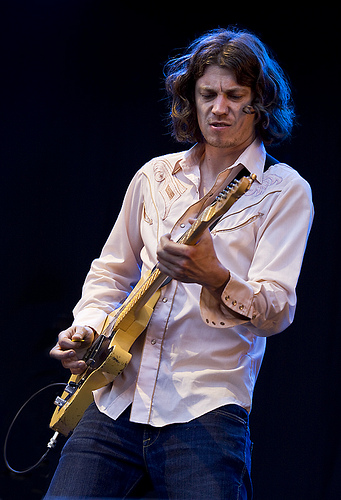
James Walbourne
Anyway, James is back on his old stamping-ground, North London, and has a Sunday night residency at the Boogaloo this month. This first night was sparsely attended, although the excellent jukebox and the Newcastle Brown warmed things up nicely.
James was accompanied by Carwyn Ellis, fine guitarist and frontman for up-and-coming Welsh band Colorama, and the two of them launched into a blistering set of mainly old blues standards (Jimmy Reed, Albert Lee, Mississippi John Hurt) and a lovely – if unexpected – I’m Your Puppet.
The irritating noise-limiter was glanced at nervously each time the volume increased, but it didn’t dampen James’s fabulous solos, soulful singing and a twitchy stomping leg that almost rivals Neil Young at his most spasmically energetic. He has a huge range of styles, from moody thrumming, r’n’b chopping, slide and soloing, but he wears his talent casually. At no time do you feel he’s showing off – everything is just right, which is how it should be. I’ll be back for more next week.
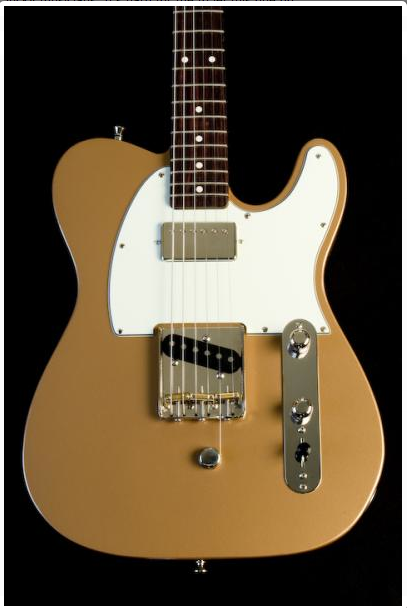
There are no YouTube links that do James justice, but for all the guitar buffs out there, here’s a pic of his lovely Creston Gold B-bender…
This was my first gig of 2010 (if you exclude seeing in the New Year to the merry sounds of Bellowhead at the Royal Festival Hall) and the freezing weather did its best to stymie us. We teetered on the icy pavements round to our local folk club, The Goose Is Out, in the bar of Dulwich Hamlet Football Club (serving London Pride and Old Scrooge). There was a good turn-out for Tim van Eyken, the talented melodeon- and guitar-playing folk singer, and he didn’t disappoint.
Tim was something of a wunderkind in the traditional folk world, having won the prestigious BBC Radio 2 Young Folk Award in 1998, but I like his fresh take on old songs, particularly when he plays with his band. His version of John Barleycorn is one of my favourites – here’s a video of it at the Shrewsbury Folk Festival in 2008:
It can be difficult for an artist to play a long solo set without sounding samey, but the combination of melodeon, guitar and a cappella gave Tim a variety that kept the audience on his side – and The Goose Is Out crowd can sometimes be rather stuffy in their adherence to tradition and their distrust of novelty.
Annie pointed out that he has quite an actorly approach to stage presence, which is probably amplified by having spent a long while as the ‘Song Man’ in the acclaimed play War Horse at the National Theatre.
Perhaps there could have been more punch to some of the songs but Tim’s a tremendous talent and a fine entertainer.
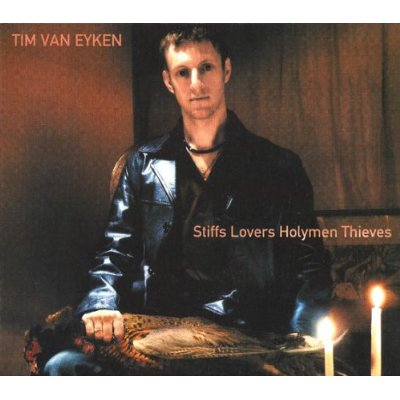
Tim's album Stiffs Lovers Holymen Thieves

 A Gig's A Gig